Introduction
Sudoku is one of those puzzles that quietly sneaks its way into your daily routine – whether you’re solving it on the train, over morning coffee, or before bed. But have you ever wondered where this addictive number game actually came from? It may surprise you to learn that while Sudoku feels like a timeless Japanese tradition, its origins stretch across continents and decades.
In this article, we’ll uncover the fascinating story of Sudoku’s creation, its journey to Japan, and how it became one of the world’s favorite brain teasers.

The Unexpected Origins of Sudoku
Although Sudoku feels like a staple of Japanese puzzle culture, its story actually begins much earlier in 18th-century Europe. The idea of arranging numbers in grids was explored by mathematicians like Leonhard Euler from Switzerland, who developed a number-placement concept called Latin squares.
Centuries later, in 1979, an American freelance puzzle designer named Howard Garns took inspiration from these ideas and created a new logic puzzle called Number Place. His version introduced a unique rule: each number from 1 to 9 must appear exactly once in every row, column, and 3×3 grid. The puzzle was first published in Dell Pencil Puzzles and Word Games, a popular magazine in the U.S.
Garns’ creation was simple, elegant, and surprisingly challenging – and it wouldn’t take long before it caught the attention of puzzle lovers far beyond American borders.
How Sudoku Became a Japanese Phenomenon
In the mid-1980s, a Japanese puzzle publisher called Nikoli discovered Number Place and decided to introduce it to their readers. They made a few small adjustments, including limiting the use of symmetrical patterns and ensuring puzzles had only one possible solution. The game was renamed Sudoku, a shortened form of the phrase “Suuji wa dokushin ni kagiru”, meaning “the numbers must remain single.”
Sudoku quickly gained a cult following in Japan, with puzzle enthusiasts appreciating its balance of simplicity and mental challenge.

The Global Explosion of Sudoku
It wasn’t until 2004 that Sudoku truly took the world by storm. British newspaper The Times began publishing daily Sudoku puzzles, and soon, other major publications followed suit. The game’s popularity exploded, leading to countless puzzle books, mobile apps, international competitions, and even online communities dedicated to mastering advanced Sudoku techniques.
Today, Sudoku is considered one of the most beloved logic-based number puzzles worldwide, enjoyed by people of all ages.
Why Has Sudoku Endured for Decades?
Unlike trends that fade with time, Sudoku remains a favorite pastime for a few key reasons:
- It’s accessible. Anyone can learn to play within minutes.
- It’s endlessly challenging. No two puzzles are ever quite the same.
- It’s great for your brain. Studies show it improves focus, memory, and logical reasoning.
- It offers a satisfying sense of achievement. There’s nothing quite like filling in that final number.
Conclusion
From an American puzzle magazine to a Japanese sensation to a global phenomenon — Sudoku’s story is a testament to the universal appeal of simple, clever challenges. Whether you’re a casual player or a serious puzzle solver, Sudoku’s unique combination of strategy and simplicity has a way of keeping us hooked.
Looking to dive deeper into the world of Sudoku?
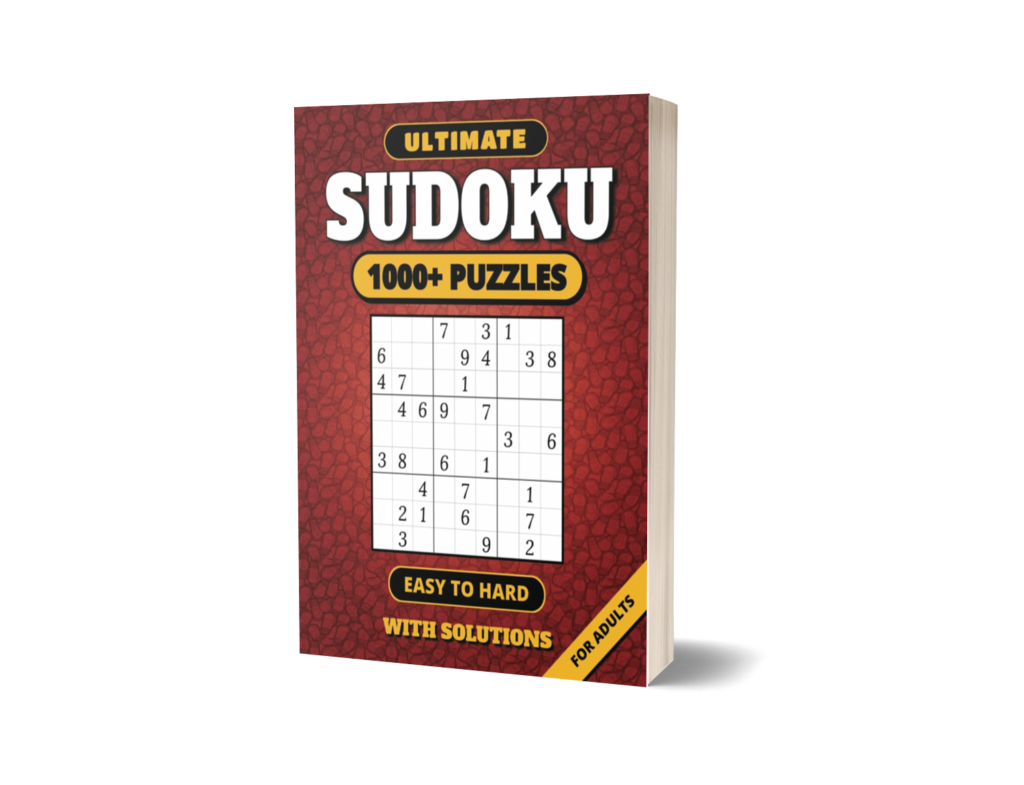
Check out my book Ultimate Sudoku Puzzles for Adults — packed with over 1,000 puzzles in varying difficulty levels, strategy tips, and even a bonus PDF with extra challenges. Perfect for both beginners and seasoned Sudoku fans!